When severe drainage problems and overgrown weeds compromised a new construction home in Eden Prairie, the property owners needed a permanent landscape and water management solution. Natural Environments Corp. step in to correct previous contractor mistakes and restore functional balance to the lot.
The newly built residence lacked a defined entrance sequence and suffered from heavy weed infestation along the front slope. Heavy rainfall threatened soil stability, while a buried drainage pipe posed an immediate flooding risk near the driveway. Bringing the property up to local codes and establishing lasting curb appeal required immediate structural, drainage, and planting interventions.
Key Takeaways
- THE CHALLENGEInvasive weeds, severe slope erosion, and a completely buried storm sewer pipe threatened the property's foundation and occupancy status.
- THE APPROACHCrews installed erosion blankets, native plant plugs, and rock rip rap to manage stormwater and stabilize the hillside.
- THE RESULTThe team resolved drainage risks, satisfied municipal permit requirements, and created a manicured entrance sequence.
Addressing these site challenges demanded a combined focus on ecological stability and structured design. By pairing deep-rooted native species with hardscape erosion barriers, the project team corrected the underlying drainage issues while laying the groundwork for an attractive, low-maintenance front yard.
Project Summary
| Client Profile: | Residential Homeowner |
| Project Location: | Eden Prairie, MN |
| Primary Objective: | Resolve code compliance issues and install sustainable native garden design solutions. |
| Core Approach: | Combining native plugs, bulk mulch applications, and stormwater management solutions to secure the hillside. |
| Key Outcome: | Eliminated driveway flooding risks and secured city occupancy approvals. |
Erosion and Site Drainage Inspection
An initial site walkthrough revealed several structural problems left behind by the original builder's contractor. The front hillside had sparse vegetation, making the soil vulnerable to washouts during heavy rainstorms. Unmanaged weeds reached several feet in height, concealing existing rock installations and obstructing the view of the home's primary entrance.
During the evaluation, inspectors identified a critical drainage failure: a 30-inch diameter storm sewer pipe had been buried under dirt and debris. Stormwater running down the elevated street had no clear exit, causing water to pooling near the driveway and flow directly toward the garage.
Executing Drainage Repairs and Native Planting
Crews began by excavating both sides of the driveway to unearth the buried 30-inch storm pipe inlet and outlet. The team placed heavy rock around the pipe openings to stabilize the surrounding soil and handle high-volume runoff. To prevent future washouts on the steep slope, workers laid down specialized seed blankets embedded with native plant seeds.
"The client really liked the final result and asked... when can we start the next project?" - (Terry, Natural Environments Corp.)
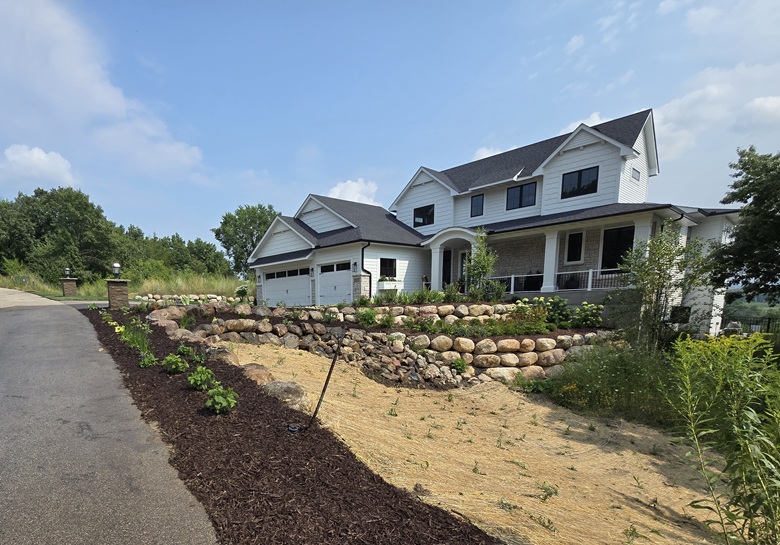
To accelerate plant establishment on the hillside, crews inserted mature native plant plugs directly through the seed blankets. This technique provided immediate root structure to hold the soil during the first season while native seeds developed over time. Near the front walkway, workers placed 30 cubic yards of shredded bark mulch at a four-inch depth to create clean ornamental planting beds. Homeowners reviewed proposed species options using a curated plant selection book prior to installation, ensuring color choices aligned with their aesthetic preferences. Through comprehensive landscape design principles, the project established a distinct transition from wild native zones to manicured garden walkways.
Long-Term Landscape Performance and Stability
The completed installation resolved the home's drainage deficiencies and fulfilled municipal permitting standards. Water flowing from the elevated street now enters the unblocked storm sewer, directing runoff safely past the driveway without washing out the yard or entering the garage structure.
The blend of native plugs and erosion blankets successfully anchored the hillside soil, preventing surface erosion during seasonal rainstorms. As the native perennials mature, their deep root systems will continue to suppress invasive weeds and create a self-sustaining, attractive frontage for the property.
Need Practical Solutions for Yard Erosion?
We bring over 40 years of local design-build expertise to complex drainage, grading, and planting challenges across the Twin Cities metro area.
Are you dealing with runoff or soil washouts on your property in Eden Prairie? Reach out to our team today for a straightforward evaluation.
Frequently Asked Questions
Why choose native plugs over seed for slope stabilization in Eden Prairie?
Native seeds can take up to three years to fully establish and anchor soil on steep slopes. Installing live plant plugs offers immediate root mass, accelerating ground cover and preventing topsoil erosion during early seasonal rains.
How does rock rip rap protect residential storm sewer outlets?
Placing sized stone rip rap at storm pipe inlets and outlets slows down high-velocity runoff water. The rocks break the force of the stream and distribute the flow evenly, preventing soil gouging and driveway washouts.
How thick should mulch be applied in ornamental garden beds?
A four-inch layer of hardwood mulch provides effective weed suppression and moisture retention for new plants. One cubic yard of mulch covers roughly 100 square feet when installed at this depth.