A stretch of Mississippi riverfront in Champlin, MN, had been held together for years by old railroad ties, aging timbers, and a concrete sidewalk that had cracked apart. The homeowner needed a shoreline system that would hold up to river conditions without the ongoing repairs and weed growth that came with the old setup.
Natural Environments Corporation, a design-build landscape contractor serving the Twin Cities metro, was brought in to replace the failing structure with something built to last. The Champlin property sits along a section of the river governed by newly adopted "critical corridor" rules, which meant the design and permitting had to satisfy city requirements before any stone could be set. The project became one of several riverfront jobs the company has since completed in the area.
Key Takeaways
- THE CHALLENGEA riverside shoreline built from old railroad ties and cracked concrete was failing and needed replacement under new city permitting rules.
- THE HARDSCAPECrews built a ledge stone wall, granite steps, and a permeable concrete putting green during the winter months.
- THE RESULTThe finished shoreline gave the homeowner a durable, low-maintenance riverfront and made the company a preferred contractor for neighboring properties.
The client wanted a shoreline that would stop deteriorating year after year and a hardscape that could double as usable outdoor space. Natural Environments Corp addressed both by combining structural stonework with a design that folded in a putting green, a tee box, and a deck built around an existing tree. Scheduling the work for winter let the crew keep the client's dock and boating season intact.
Project Summary
| Client Profile: | Riverfront homeowner, Champlin, MN |
| Project Location: | Champlin, Minnesota (Mississippi River) |
| Primary Objective: | Replace a failing railroad-tie shoreline with a stable, permeable system, part of the company's broader Shoreline Erosion Control work along Twin Cities waterways. |
| Materials Selected: | Fourteen-inch ledge stone for the retaining wall, locally sourced granite steps, and permeable concrete, all part of the crew's Stone Wall Installation approach. |
| Key Outcome: | A durable, low-maintenance riverfront with an integrated deck, putting green, and tee box completed without disrupting the client's boating season. |
Failing Railroad-Tie Shoreline Assessment
Before construction began, the crew found the existing shoreline held in place with old railroad ties, aging timbers, and a concrete sidewalk that had cracked and shifted over time. None of it was doing the job it was meant to do, and the materials themselves were adding to the deterioration rather than slowing it down. The homeowner wanted a permanent fix, not another temporary patch.
Permitting for the project took eight months because the city had recently adopted new "critical corridor" rules for this stretch of the Mississippi. Natural Environments Corp worked through the review process to secure approval for a design that replaced the old materials with a more stable, permeable system suited to the site's regulatory requirements.
Building The Winter Riverfront Wall
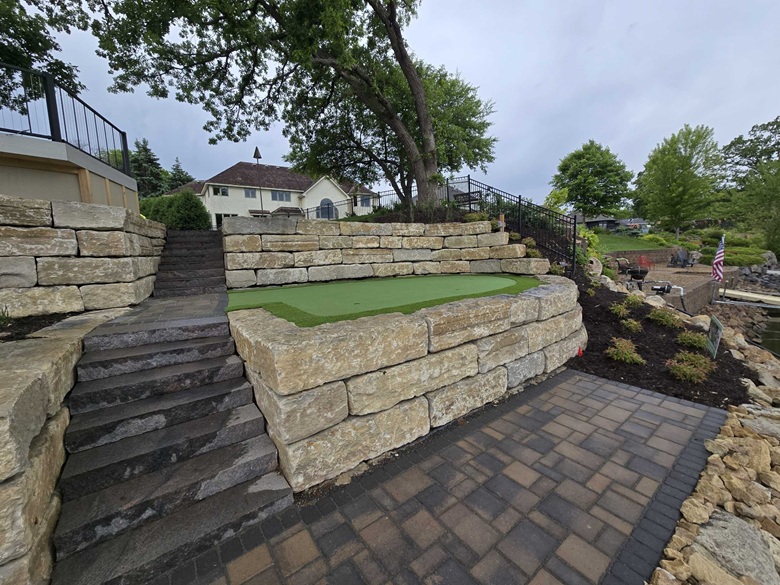
Crews built the new shoreline wall out of ledge stone, fourteen-inch-thick rectangular pieces installed with heavy machinery and stacked like interlocking blocks to form a solid, load-bearing structure. Around the putting green, the team placed permeable concrete along the perimeter, a technique the crew had used previously on a pool project in Long Lake, chosen here because it lets water drain properly and keeps the surrounding structure from separating or shifting.
For the steps, the team selected granite with a thermalized finish for a non-slip, durable surface, sourced locally within Minnesota to cut down on trucking costs while still delivering a long-lasting alternative to concrete. The project was scheduled during winter specifically to avoid interrupting the client's boating season, and the crew used frost protection along with clear gravel, a base material free of fines, to keep the ground workable and prevent freezing or settling issues during the cold-weather build.
Coordinating a project of this scope through a Minnesota winter took careful sequencing between the stonework, the Deck Installation around the existing tree, and the drainage work tied to the new Drainage Solutions built into the site. Each piece had to work together so the finished shoreline functioned as one system rather than a series of separate repairs.
A Riverfront Built To Last
The finished shoreline replaced a patchwork of railroad ties and cracked concrete with a stone wall, granite steps, and a deck that wraps around a large existing tree. The putting green, which also serves as a tee box for hitting dissolving golf balls into the river, gave the homeowner a usable outdoor feature in addition to a stabilized bank.
The design was built with low maintenance in mind, since the clients specifically wanted to avoid the weed growth and ongoing deterioration that came with the old shoreline. The project's success, along with similar work nearby, led Natural Environments Corp to become a preferred contractor for other properties along that stretch of the river.
Need Shoreline Work in Champlin?
We have handled riverfront and lakefront stabilization projects across the Twin Cities, from permitting through winter construction. Our crews self-perform the stonework, drainage, and hardscaping needed to build a shoreline that holds up to Minnesota conditions.
Dealing with a failing shoreline or an outdated hardscape in Champlin or a nearby community? Reach out and we can walk the site with you.
Frequently Asked Questions
Why did this Champlin shoreline project take winter?
The crew scheduled construction for winter specifically so the work would not interrupt the client's boating season. Frost protection and a clear gravel base kept the ground workable and prevented freezing and settling issues during the cold months.
What permitting is required for Mississippi River shoreline work in Champlin?
This project required approval under the city's newly adopted critical corridor rules, which extended the permitting timeline to about eight months. Natural Environments Corp manages the evaluation and documentation process for shoreline projects along regulated stretches of Minnesota waterways.
Why use ledge stone and granite instead of concrete?
Fourteen-inch ledge stone provides a durable, load-bearing wall, while thermalized granite steps offer a non-slip surface that holds up better than concrete over time. Sourcing the granite locally within Minnesota also kept trucking costs down while providing a long-lasting, low-maintenance material.