Types of Pergolas: Which One Fits Best in Your Backyard?
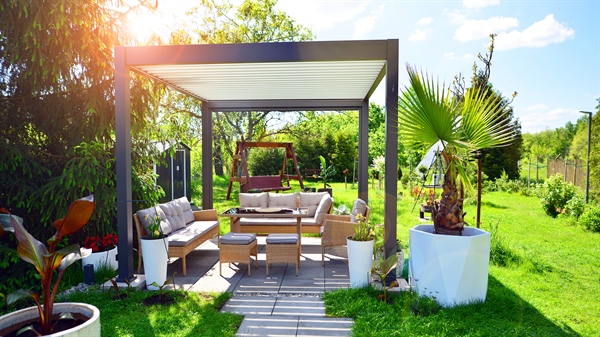
Transforming your backyard into a relaxing retreat or a stylish space for entertaining often starts with the right structure, and few additions are as timeless and versatile as pergolas.
Whether you're envisioning an open-air lounge space or a partially shaded patio, understanding the different types of pergolas can help you make the best decision for your home.
From enhancing aesthetics to offering practical functionality, pergolas provide structure, shade, and definition to outdoor living areas. However, not all pergolas are created equal, and selecting the right style depends on your space, goals, and personal preferences.
In this guide, we’ll explore the core design differences between freestanding and attached pergolas, as well as how louvered options compare to traditional open-top styles. Natural Environments Corp. brings clarity to each of these options, ensuring you’re better informed for your outdoor planning journey.
Freestanding vs. Attached Pergolas: Key Design Differences
Freestanding pergolas are self-supporting structures that can be placed anywhere in a yard, offering maximum flexibility in placement and design. They typically feature four or more posts anchored into the ground and require no structural connection to a home or existing building.
This makes them ideal for creating standalone seating areas, garden focal points, or poolside retreats. Freestanding pergolas also provide full design autonomy, allowing homeowners to choose shapes, orientations, and materials that best complement the surrounding landscape.
Attached pergolas, in contrast, are secured directly to a home or building, typically with two posts on the outer edge and a ledger board affixed to the house. This configuration integrates seamlessly with patios and decks, creating an extension of indoor living space.
Attached pergolas are efficient in terms of space and material use, and they offer structural stability when fastened properly. However, they may be limited by the building's architecture, which can affect the roof slope, mounting options, and drainage considerations.
It's All About Space & Flexibility
Design-wise, the decision between freestanding and attached pergolas often comes down to how you want to use the space and how much flexibility you need.
Freestanding options can become a centerpiece anywhere in the yard, while attached models deliver a cohesive transition from indoor to outdoor living.
For homeowners considering functional upgrades such as lighting, fans, or retractable canopies, both styles offer integration opportunities, but attached pergolas may simplify power access and installation.
Louvered vs. Traditional Open-Top Pergolas: A Comparative Overview
Louvered pergolas feature adjustable slats or blades on the roof that can be tilted to control sunlight, shade, and ventilation. These systems often incorporate motorized or manual mechanisms to open and close the louvers, providing dynamic control over the environment beneath.
Louvered designs are ideal for areas that experience fluctuating weather conditions, as the roof can be closed during rain to protect furniture or guests and opened during sunshine to enjoy the open sky.
This flexibility adds year-round usability, making louvered pergolas a practical and high-performance solution for homeowners seeking adaptability.
Traditional open-top pergolas, by comparison, consist of fixed crossbeams or rafters that provide partial shade but offer no protection from rain or direct sunlight.
Their appeal lies in simplicity, aesthetic openness, and classic garden architecture. Open-top designs encourage airflow and promote the growth of climbing plants, such as wisteria or ivy, creating a natural canopy over time.
However, their functionality is more limited, as they do not offer the ability to block weather elements or adjust light levels throughout the day.
Retractable Pergolas: Features & Value Assessment
Retractable pergolas are constructed with flexible canopy systems that slide open or closed along a track, enabling users to adjust the shade and coverage according to sun exposure or changing weather conditions.
These canopies may be made of weather-resistant fabric or interlocking slats and are often paired with motorized controls for ease of use. This adaptability makes retractable pergolas an appealing option for outdoor areas that double as entertainment spaces or dining zones, where protection from sun and rain enhances comfort and usability.
From a functional standpoint, retractable pergolas offer significant benefits in terms of climate responsiveness. Homeowners can extend the canopy to block intense midday sun, reduce UV exposure, or cover guests during unexpected showers.
When open, the structure preserves the open-air experience, creating a seamless transition between indoor and outdoor environments.
Some high-end retractable systems also feature integrated lighting, rain sensors, or wind detection technology, further increasing their practical value.
However, the investment in a retractable pergola may be higher than other types due to mechanical components, motorization, and durable canopy materials.
Maintenance needs can also be greater, depending on the exposure to debris, wind, or precipitation.
While not necessary for all backyards, they are worth considering for those who host frequently, seek versatile weather protection, or want a structure that adapts to daily use patterns. This level of customizability can justify the added expense for many homeowners.
Prefabricated vs. Custom Pergolas: Pros and Cons
Prefabricated pergolas are pre-designed and manufactured units that arrive ready for assembly, often with all parts cut to size and hardware included.
Their main advantages are cost-effectiveness and installation speed. These models are available in a variety of styles, sizes, and materials, providing a streamlined solution for homeowners seeking quick upgrades.
Prefab options are particularly appealing for DIY enthusiasts or for those with standard-sized outdoor areas. Many manufacturers also offer modular add-ons such as retractable canopies or privacy screens to increase versatility within a fixed design.
Custom pergolas, by contrast, are designed from the ground up to match specific site conditions, homeowner preferences, and architectural details.
This allows for complete flexibility in terms of dimensions, materials, and finishes. Custom-built structures can be tailored to accommodate unique property layouts, elevation changes, or structural tie-ins to existing features like pools, patios, or outdoor kitchens.
They also provide the opportunity to integrate luxury elements such as lighting, audio systems, or specialized wood treatments that aren’t typically available in prefabricated kits.
The Challenges of Each
While custom pergolas offer greater design freedom and aesthetic cohesion, they also require more time and investment. The planning, permitting, and construction phases can extend the project timeline significantly.
Prefabricated units, on the other hand, are limited by standard dimensions and materials, and may not align perfectly with the existing landscape or architecture.
Homeowners must weigh budget, timing, and design aspirations carefully when choosing between these two options.
If you'd like to explore tailored pergola solutions with an expert team, Natural Environments Corp. can guide your planning process.
Ready to Plan the Perfect Pergola for Your Landscape?
Our team collaborates with homeowners across the Twin Cities to develop customized solutions that meet their unique climate, aesthetic, and structural requirements.
Whether you’re deciding between prefabricated convenience or custom versatility, or simply trying to understand how each pergola type enhances function and form, we provide clarity at every step.
Our experience with louvered, retractable, and traditional systems means we can help you weigh the advantages of each and select materials, dimensions, and orientations that maximize your outdoor investment.
Contact NEC today to discuss your pergola project. Call us at 763-544-8002 to answer your questions and schedule a consultation. Ready to take the next step? Request a quote now and start turning your outdoor vision into a reality!